 Slaw
There are some significant changes coming to Monster Energy AMA Supercross in 2027. Earlier this week, the American Motorcyclist Association (AMA) released a competition bulletin outlining updates to the 2027 Supercross rulebook, and there are several major changes worth noting. You can read the full bulletin here. Read the official 2027 Supercross rulebook.
From smaller Main Event fields and changes to qualifying to new licensing requirements and technical regulations, there’s plenty to unpack before the gates drop on the new season.
Here are some of the biggest changes.
New Sound Limits for 2027
One of the biggest changes coming in 2027 is a significant reduction in the maximum permitted sound levels for both the 250 and 450 classes. The SMX League, AMA Pro Racing, AMA, and participating manufacturers have worked together to establish a new 109 dB sound standard beginning with the season opener at Anaheim 1 on January 9.
The previous pre-race limit of 112 dB will be reduced to 109 dB, a three-decibel decrease. The new rulebook also establishes a post-race maximum of 110 dB, with testing conducted using the two-meter-max method.
While three decibels might not sound like much, the reduction is part of a larger initiative to limit noise levels. The new standard is also designed to align motorcycle development across international racing, allowing manufacturers to work toward a more consistent global sound requirement. All manufacturers competing in SMX League events have committed to producing motorcycles that comply with the updated regulations.
You can read more about the new sound regulations and the reasoning behind the changes here.
Main Event Fields Reduced to 20 Riders
Beginning in 2027, both the 450 and 250 classes will feature 20-rider Main Events, down from a 22-rider format. That reduction carries over into nearly every part of the race program.
Under the new standard format:
- Main Events will feature 20 riders instead of 22.
- Heat Races will feature 19 riders instead of 20.
- The top eight riders from each Heat Race will advance directly to the Main Event, down from nine.
- The fastest 38 riders will qualify for the night program, down from 40.
- Event entries will be capped at 66 riders per class, down from 80.
The changes aren’t limited to traditional events. Triple Crown races will also feature 20-rider fields instead of 22, with the number of riders advancing directly from timed qualifying reduced from 18 to 16. Riders qualifying 17th through 38th will be placed into the LCQ, where the remaining four spots will be determined.
There’s also a significant change regarding motorcycle usage, as riders will NO LONGER be permitted to use two motorcycles. Only one motorcycle per rider moving into 2027.
Minimum Age for AMA Rider License Increased to 18
Another notable change comes in the licensing requirements. The minimum age to be eligible for an AMA Rider License has increased from 17 to 18 years old.
The announcement coincides with the expansion of the SMX Next program beginning next year, which will unify the prospect races held in conjunction with the Monster Energy AMA Supercross Championship and Pro Motocross Championship, sanctioned by AMA Pro Racing, to establish a defined athlete development pathway to the Monster Energy SMX World Championship.
SMX Next will be featured at 10 events during the regular season, with a field of 25 riders at five Supercross races and five Pro Motocross races for an equal balance of discipline representation. Prospects will earn points at each SMX Next race, where the first four events in each respective championship will set the stage for the SMX Next Showdown at the fifth and final race of Supercross [Gillette Stadium in Foxborough, Massachusetts] and Pro Motocross [Ironman Raceway in Crawfordsville, Indiana]. The total points scored across all 10 events will be used to determine seeding for the postseason SMX Next World All-Stars, which will once again be held at Playoff 1 and Playoff 2 of the SMX World Championship.
Chest and Back Protection Requirements Updated
The AMA has also updated its requirements regarding chest and back protection for the 2027 season. Under the revised regulations, all competitors are required to wear chest and back protection during competition. The protective equipment may be worn underneath or over the rider’s jersey and should cover the sternum, front and rear ribs, and spine. Additionally, if a rider wears a chest/back protector or neck brace over their jersey, their name and assigned number must remain visible, either on the jersey or on the protective equipment itself.
Additional Changes Worth Noting
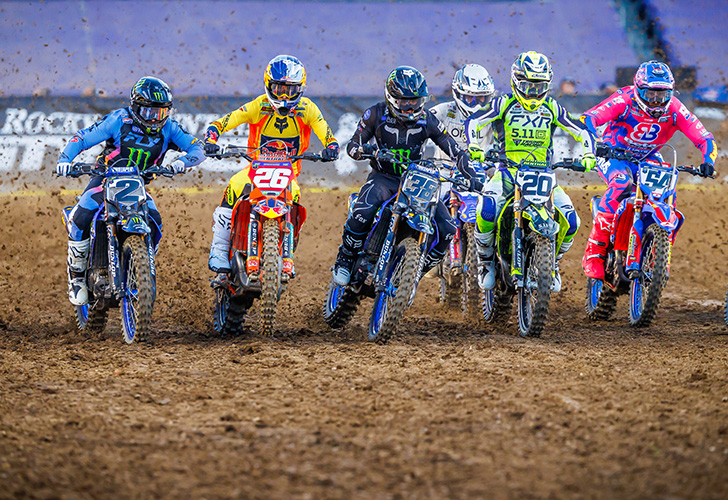
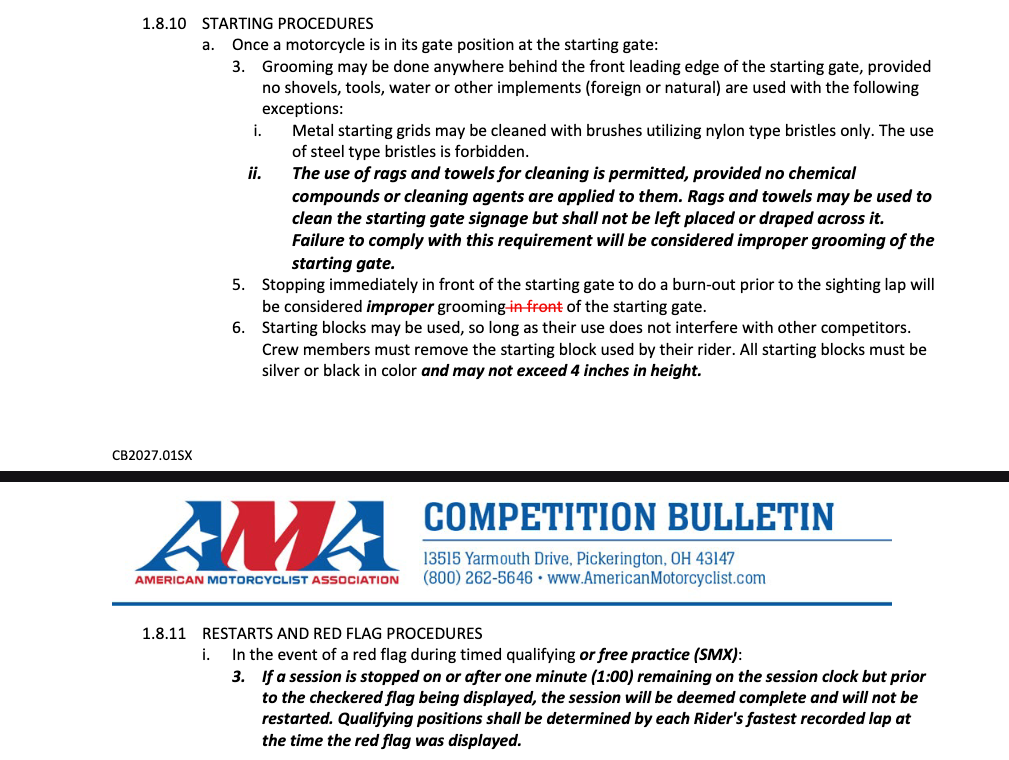
Starting Blocks: All starting blocks must be silver or black in color and may not exceed 4 inches in height.
Starting gate procedures: New regulations address improper gate grooming, cleaning materials, and starting blocks.
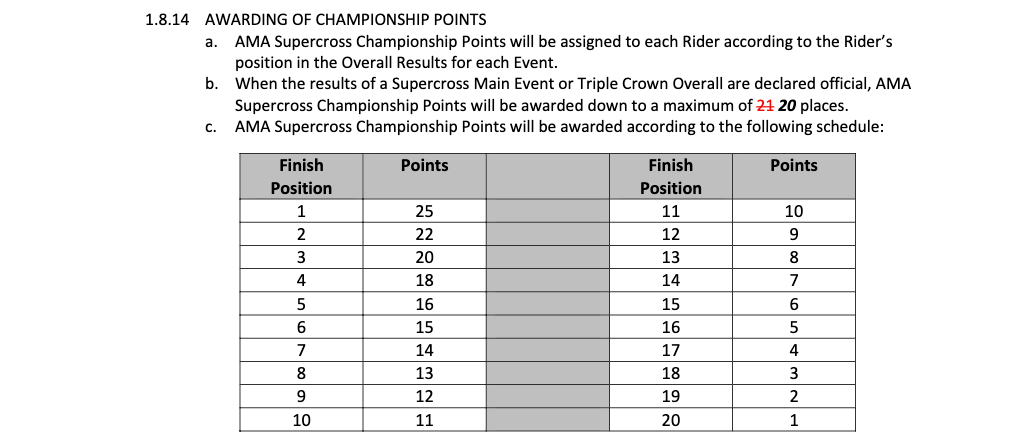
Championship Points: Return to top 20 being awarded points.
Restricted sponsorships: Firearms and ammunition companies are no longer eligible to sponsor teams, riders, or associated participants.
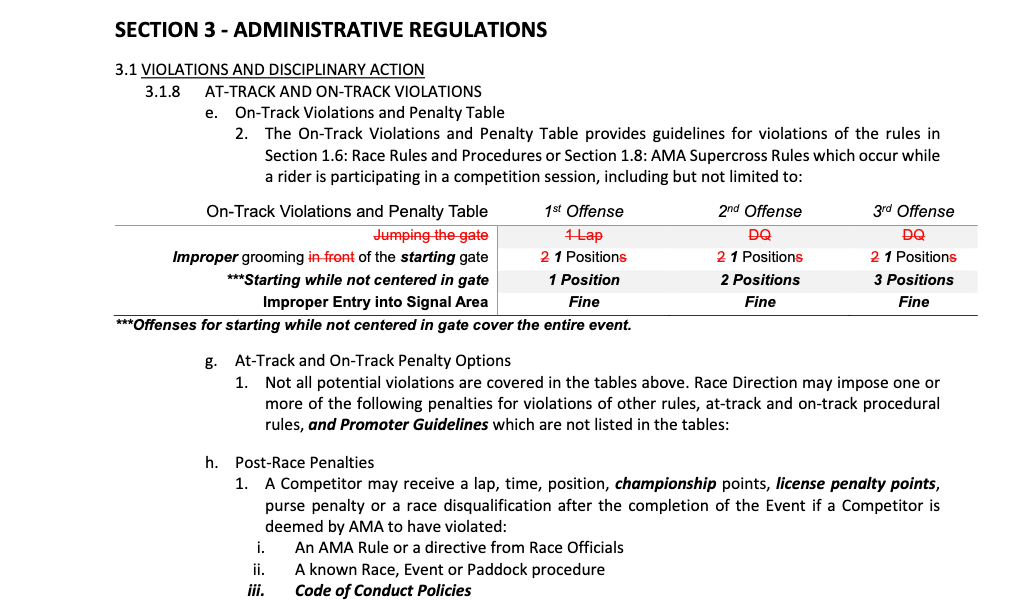
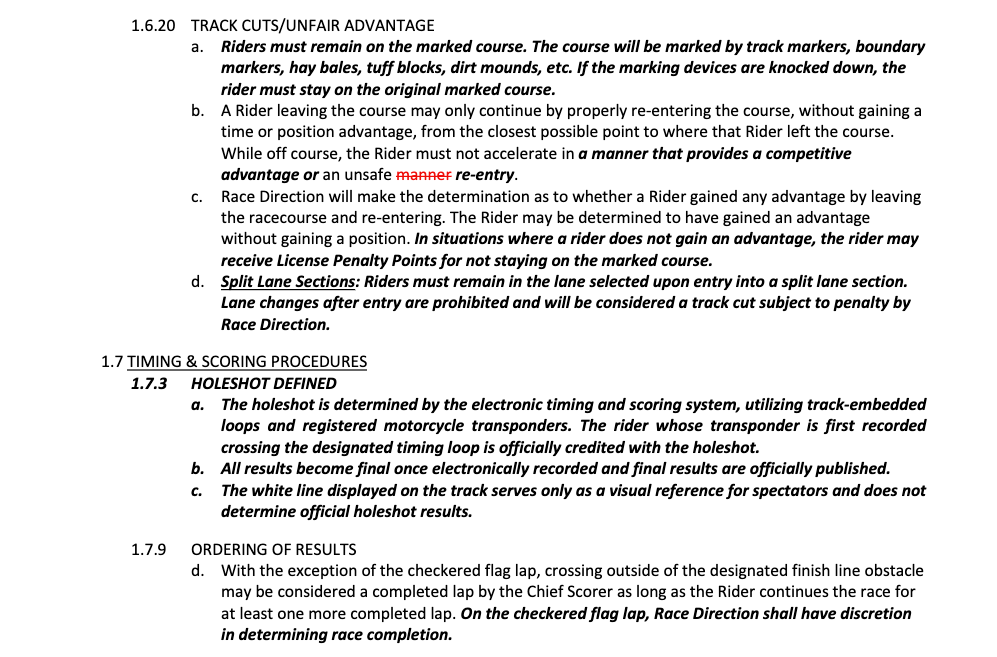
Penalty updates: See the new rules in regards to certain infractions: