 Brandon Clarke
There’s a version of the moto dream that looks real clean on Instagram. Factory awnings. Wrapped vans. Kids who’ve been on a bike since they could walk on tracks, with coaches, with plans.
And then there’s Ashton Oudman, who placed second overall in 250 Pro Sport class at the AZ Open. Same love for dirt bikes. Same work ethic. Completely different road.
Ashton didn’t grow up chasing trophies or living out of a motorhome. His dad worked construction—dump trucks, 50-plus hours a week—the kind of guy who never got a dirt bike as a kid because, by his own admission, he probably would’ve killed himself on it. So when he turned 18, he bought one. Rode his whole life. And when Ashton came along, dirt bikes were already baked into the family DNA.
That’s how you end up on a PW50 at a year and a half old. Not because there was a master plan—but because Dad welded together some ready rod and 2x4s so Ashton could reach the pegs. Problem solved. Send it.
But this wasn’t a moto family chasing gate drops every weekend. Ashton didn’t grow up pounding motos or stacking trophies. It was trails. Weekend rides. Just riding for fun. The family vibe was never “we’re going pro.” It was “let’s go ride.” Racing came later. Much later.
KTM 65. Then an 85. Still mostly trail riding. Minimal track time. And then somehow—because dirt bike math never makes sense—at 11 years old Ashton lines up on a 250, wins his first beginner race at Hannegan Speedway in Bellingham, Washington, and works his way into C class from there.
No pressure. No blueprint. Just riding because that’s what they did.
That same mentality carried through his entire amateur career. Everything stayed local—Washington and Oregon. The Oudmans made a decision early on: they weren’t going into debt for racing. No chasing nationals. No maxing out credit cards trying to keep up with kids who had way more resources.
Honestly? That’s refreshing.
Eventually, Ashton earned his pro license and reality showed up fast. The Northwest isn’t exactly deep with pro talent, and suddenly he’s lining up with only a handful of pros at local races. He’s working full-time construction. Grinding. Trying to figure out what’s next.
Then he gets laid off.
Instead of panicking, he leans into Kicker Arenacross. Starts doing well. Makes some noise. Gets hurt, because of course he does. And somewhere between injuries and half-baked preparation, it clicks: this isn’t going to work without structure. So he does something most people talk about but never actually do. He saves his money. Packs up. And goes all-in at ClubMX.
Let’s be clear: this wasn’t some rich-kid move. This was blue-collar math. Work. Save. Commit. No safety net.
At ClubMX, reality hits again. Ashton lands in Group Two, the mix of fast amateurs and developing pros. Group One? That’s Hunter Yoder, Coty Schock, Cade Clason, Gavin Towers, and Freddie Noren. Legit main event dudes. The pace is real. The track gets absolutely destroyed.
And that’s the point. A typical day starts around 10:30 a.m. Supercross warm-up. Stretching. Cardio. Bike prep. Three to four riding sessions. Wrap around 3 p.m., then lifting or more cardio. Rinse. Repeat. By the end of the day, the track is beat to hell and Ashton loves it. Because real race tracks don’t stay smooth. He’s not just learning how to ride faster. He’s learning how to be a professional.
And here’s the part that might matter more than anything else: access.
At ClubMX, you’re surrounded by people who’ve been there. Mike Bonacci. Brandon Haas. Daniel Blair. Mechanics. Riders. Coaches. A ridiculous amount of knowledge if you’re willing to ask. That’s the hard part for Ashton. He’s naturally shy. Not loud. Not self-promoting. And that might be exactly why he’s flown under the radar for so long.
From a coaching standpoint, the riders you want aren’t just the fastest, they’re the ones who want to learn. The ones who speak up. The ones who admit they don’t know everything. Ashton is as hardworking as they come. Even during the holidays, when most amateur riders had gone home, he was still there grinding.
That access alone might be more valuable than the riding itself.
As for goals? Ashton wants to race 250 East Coast Supercross. Straight up. But realistically, the SMX Next series might make more sense if he can get in.
Either way, don’t expect him to look like he belongs on paper. That’s kind of the whole point.
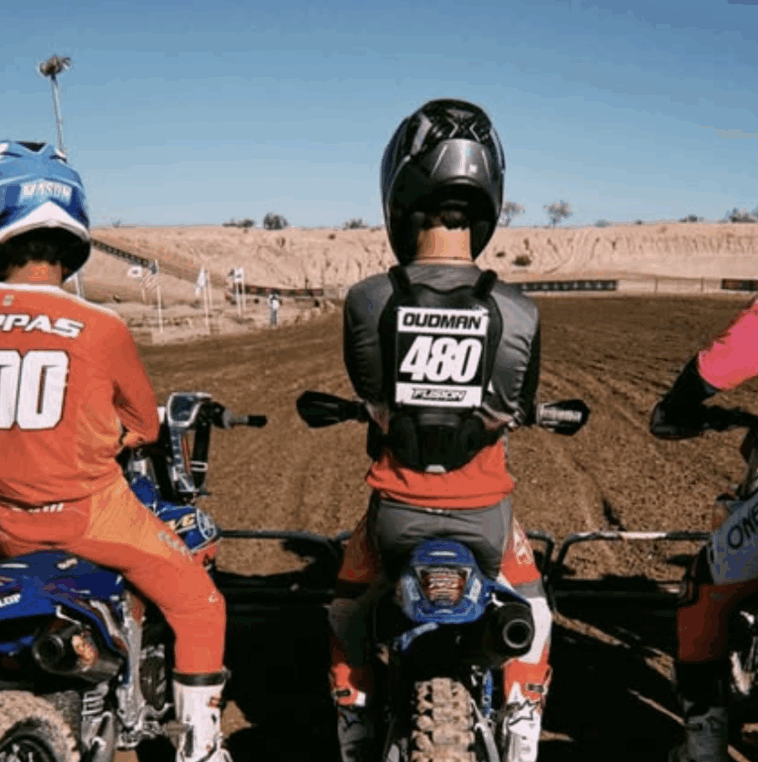
Main image: Ashton Oudman